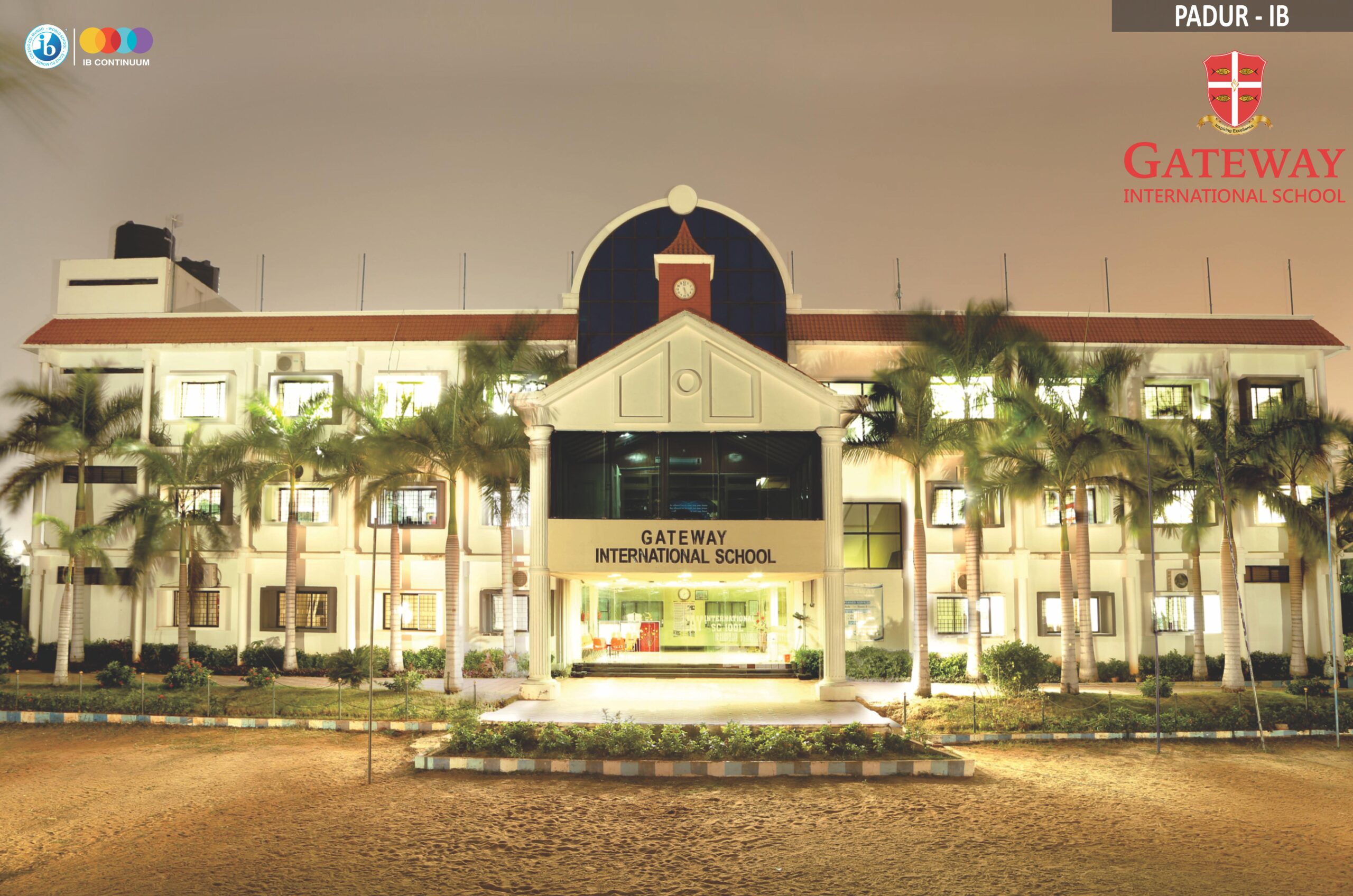
Gateway International School CBSE, PadurGIS promotes High-quality Education, Holistic Development, English Immersion, Leadership Skills and Community Servicefiber_manual_recordHolistic Education Approachfiber_manual_recordHolistic Education Approachfiber_manual_recordQuick Contact
Gateway to Excellence
Discover a school where academic brilliance meets character building. At Gateway Schools, we inspire young minds with holistic education, state-of-the-art facilities, and a nurturing environment that shapes future leaders.
Why Choose Us ?
Holistic Education Approach
At Gateway Schools, we focus on nurturing every aspect of a child’s development—academic, emotional, social, and physical. Our curriculum encourages curiosity, creativity, and critical thinking, preparing students to excel in all areas of life.
Focus on Values and Character Building
We instill core values like integrity, respect, and responsibility in our students, shaping them into well-rounded individuals ready to contribute positively to society.
Experienced and Passionate Faculty
Our team of dedicated educators is committed to fostering a love for learning. With a wealth of experience and continuous training, they create an engaging and supportive environment for every student.
State-of-the-Art Facilities
From modern classrooms and advanced science labs to sports complexes and digital learning tools. Gateway Schools provide the resources students need to thrive in today’s world.
Individualized Attention for Every Student
Our balanced Student-to-Teacher ratio ensures personalized guidance, enabling every child to discover their strengths and overcome challenges at their own pace.
Global Perspective with Local Roots
Gateway Schools blend international teaching methodologies with a deep appreciation for cultural heritage, empowering students to compete globally while staying grounded in their roots.
Padur
IB Continuum World School
IB CONTINUUM WORLD SCHOOL
Jabakadal Street, Padur, Kazhipattur Post, OMR, Kelambakkam, Chennai – 603103