

Apply for Admission

Category: Parenting / Admissions

School Readiness Checklist_ 12 Signs of Kindergarten Readiness

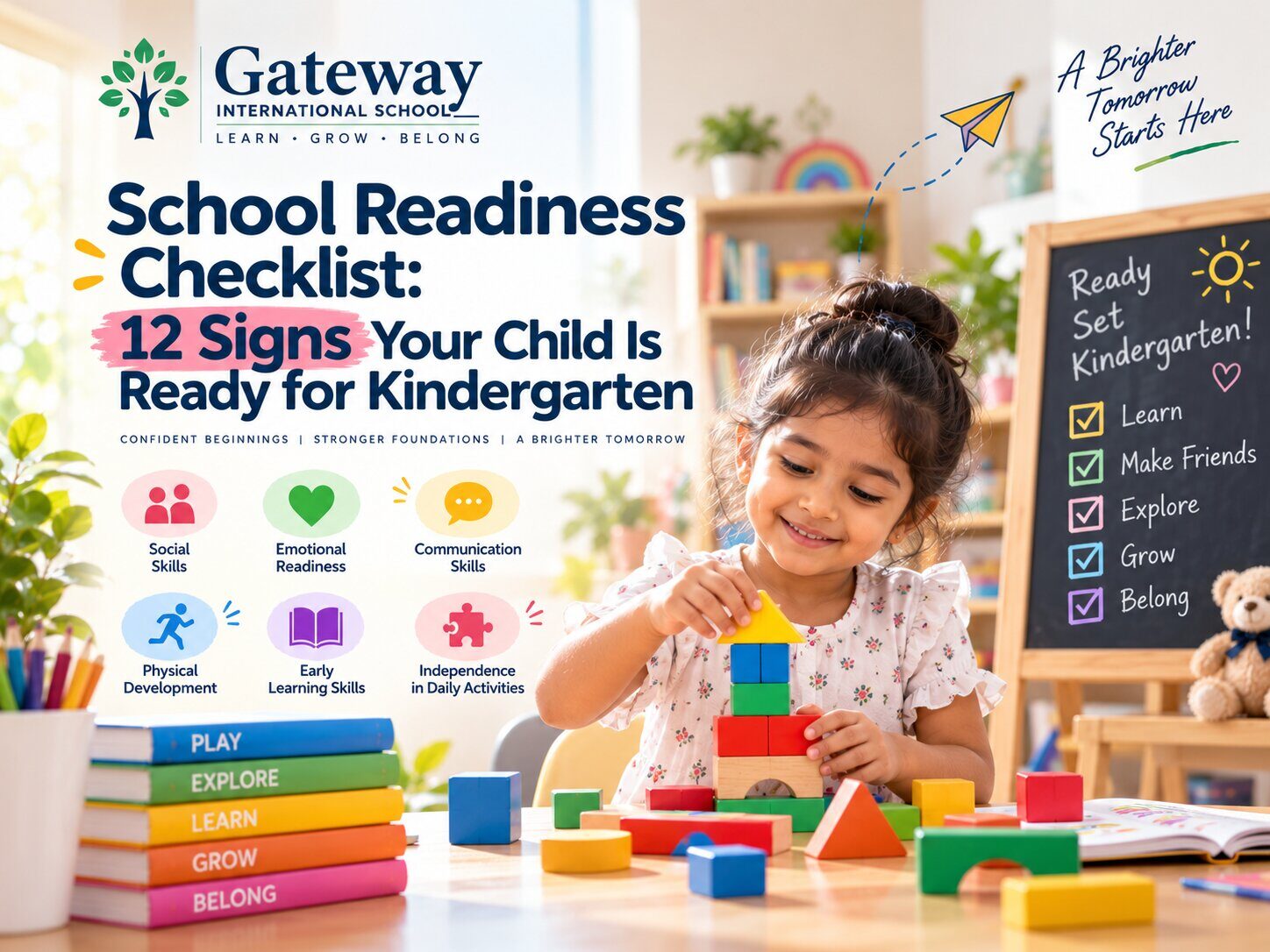
School Readiness Checklist: 12 Signs Your Child Is Ready for Kindergarten
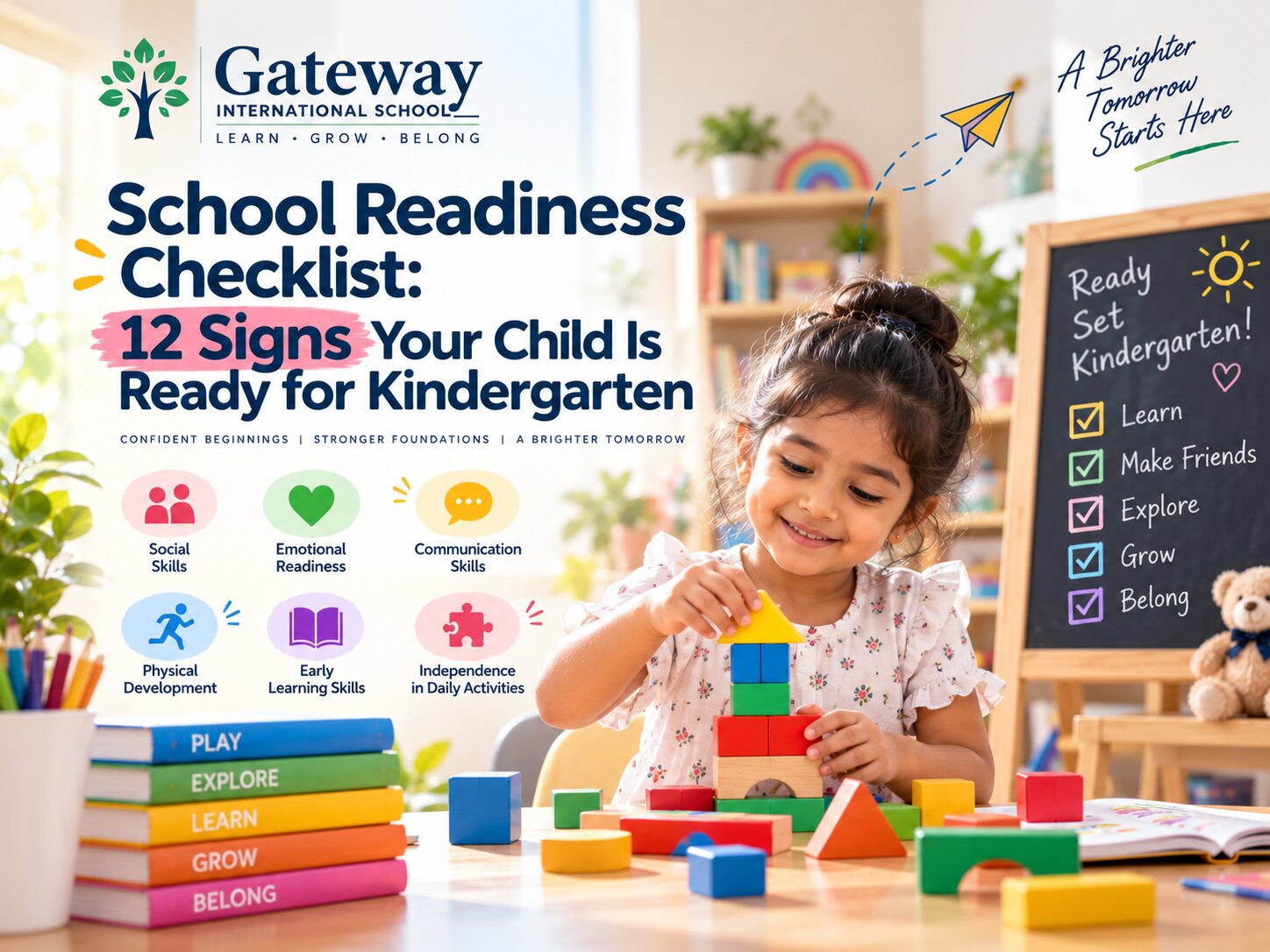
School Readiness Checklist: 12 Signs Your Child Is Ready for Kindergarten

Starting kindergarten is an exciting milestone for both children and parents. It marks the beginning of a new journey filled with friendships, discoveries, classroom activities, and opportunities to develop essential life skills.

However, many parents wonder whether their child is truly ready for school. Will they be able to communicate their needs, follow simple instructions, interact with other children, and manage everyday activities independently?

The good news is that school readiness is about much more than knowing the alphabet or counting numbers. It involves a combination of social, emotional, physical, language, and early learning skills that help children adjust to a structured learning environment.

In this guide, Gateway Schools explores 12 signs of kindergarten readiness, practical ways parents can prepare their children, and what to consider when choosing the right early learning environment.

What Is School Readiness?

School readiness refers to the skills, behaviours, and developmental abilities that help children participate comfortably in a school environment.

These skills develop gradually through everyday experiences such as playing, talking, exploring, listening to stories, interacting with others, and learning to complete simple tasks.

Every child develops at a different pace. A child may be confident socially but still need help with self-care, while another may enjoy learning activities but take longer to feel comfortable in a new environment.

There is no single checklist that determines whether a child is ready for kindergarten. Instead, parents can use the following signs as a guide to understand their child’s strengths and identify areas where additional support may help.

12 Signs Your Child Is Ready for Kindergarten

1. Your Child Can Communicate Basic Needs

Being able to communicate basic needs helps children feel more secure in a classroom.

Your child may be ready if they can:

  • Tell an adult when they are hungry, thirsty, tired, or uncomfortable.
  • Ask for help when needed.
  • Communicate simple thoughts, feelings, or requests.
  • Understand and respond to familiar questions.

Children do not need perfect pronunciation or advanced vocabulary before starting school. What matters is that they have ways to communicate and that adults can understand their needs.

How parents can help: Talk to your child throughout the day, read stories together, and encourage them to describe their experiences. Give them time to express themselves without constantly correcting their speech.

2. Your Child Can Follow Simple Instructions

Kindergarten involves everyday instructions such as putting toys away, joining a group activity, washing hands, and collecting learning materials.

Your child may be developing school readiness if they can follow familiar one- or two-step instructions, particularly when the directions are clear and appropriate for their age.

How parents can help: Turn everyday routines into small learning opportunities. For example, ask your child to put their shoes away and then bring their water bottle. Use simple language and demonstrate what you mean when necessary.

3. Your Child Is Beginning to Manage Emotions

Starting school can bring excitement, uncertainty, frustration, and separation anxiety. Children do not need to manage every emotion independently, but they benefit from gradually learning how to express feelings and accept support.

Look for signs that your child:

  • Can communicate basic emotions.
  • Begins to calm down with reassurance.
  • Can recover from minor disappointments with adult support.
  • Is gradually learning to wait, take turns, or cope with changes.

How parents can help: Name emotions during everyday situations. Say, “You seem disappointed that playtime is over. Let’s talk about it.” Offer comfort, maintain predictable routines, and practise small transitions.

Remember that occasional crying, frustration, or tantrums do not automatically mean a child is unprepared for school.

4. Your Child Shows Interest in Other Children

Kindergarten provides opportunities to make friends, cooperate, share experiences, and participate in group activities.

Your child may show readiness by:

  • Showing curiosity about other children.
  • Playing alongside or with other children.
  • Participating in simple group activities.
  • Beginning to understand sharing and turn-taking.

Not every child will immediately join group play. Some children observe quietly before participating, and others need additional time to feel comfortable.

How parents can help: Arrange opportunities to play with other children, visit parks, or participate in age-appropriate group activities. Encourage cooperation without expecting your child to share perfectly every time.

5. Your Child Is Developing Independence in Self-Care

Kindergarten routines often involve simple self-care activities. Depending on the school’s expectations and the child’s developmental stage, these may include eating, washing hands, using the toilet, and managing personal belongings.

Your child may be developing independence if they can:

  • Attempt to eat with age-appropriate utensils.
  • Wash and dry their hands with appropriate supervision.
  • Communicate when they need to use the toilet.
  • Attempt to put on shoes or manage simple clothing.
  • Recognise their own belongings.

Children may still need adult assistance, and expectations vary by age and school.

How parents can help: Practise self-care activities at home without rushing. Allow your child to try tasks independently and offer help when needed.

6. Your Child Can Separate from Familiar Adults with Support

Separation from parents or caregivers can be one of the biggest adjustments when starting kindergarten.

Signs of developing readiness may include:

  • Staying with a trusted adult for short periods.
  • Participating in an activity while a parent is nearby or temporarily away.
  • Accepting comfort from another familiar caregiver.
  • Gradually becoming comfortable in new environments.

Some children may cry during the first few school days, even when they are otherwise ready to participate in classroom activities.

How parents can help: Arrange short separations with trusted caregivers, visit the school before the first day if possible, and establish a consistent goodbye routine. Avoid sneaking away without saying goodbye, as this may make separation more confusing.

7. Your Child Shows Curiosity About the World

Curiosity is an important foundation for early learning. Children naturally explore their surroundings by asking questions, observing changes, and trying new activities.

Look for behaviours such as:

  • Asking questions about everyday objects and events.
  • Exploring toys and discovering how things work.
  • Showing interest in animals, nature, stories, or everyday activities.
  • Enjoying simple experiments or problem-solving tasks.

How parents can help: Encourage questions, explore nature together, build with blocks, and let your child investigate safe everyday objects. You do not need to know every answer. Discovering answers together can make learning more enjoyable.

8. Your Child Can Participate in Short Activities

Kindergarten includes stories, songs, creative activities, games, and teacher-guided experiences. Children gradually learn to participate in these activities while managing their attention.

Your child may be developing this skill if they can:

  • Listen to a short story.
  • Participate in a simple game.
  • Complete an age-appropriate puzzle.
  • Spend a little time drawing, building, or creating something.
  • Return to an activity after a brief distraction.

Young children naturally move between activities, and sustained attention varies considerably with age, interest, sleep, and the environment.

How parents can help: Offer short, enjoyable activities and gradually increase their duration when your child is comfortable. Alternate quiet activities with active play rather than expecting long periods of sitting still.

9. Your Child Is Developing Early Language and Literacy Skills

Children do not need to read independently before entering kindergarten. Early literacy is about developing the foundations for reading, writing, listening, and communication.

Useful emerging skills include:

  • Enjoying picture books and stories.
  • Recognising familiar objects and pictures.
  • Listening to rhymes, songs, and simple stories.
  • Recognising their own name, where developmentally appropriate.
  • Showing interest in drawing, scribbling, or making marks on paper.

How parents can help: Read together daily, sing rhymes, talk about pictures, and encourage drawing. Focus on enjoyment and communication rather than formal reading drills.

10. Your Child Is Exploring Early Mathematical Concepts

Early mathematical understanding develops through everyday experiences well before children begin formal mathematics lessons.

Your child may demonstrate emerging skills by:

  • Counting a few familiar objects.
  • Sorting toys by colour, shape, or size.
  • Comparing which object is bigger or smaller.
  • Recognising simple patterns.
  • Exploring concepts such as more, less, full, and empty.

These abilities develop at different rates, and children do not need to master a specific number range before kindergarten unless the school has particular age-related expectations.

How parents can help: Count fruit while shopping, sort toys during cleanup, compare the sizes of objects, and identify patterns in clothing or household items. Keep activities playful and practical.

11. Your Child Is Developing Gross and Fine Motor Skills

Physical development supports many everyday classroom activities, from moving safely around the school to drawing and manipulating learning materials.

Gross motor skills involve larger movements, such as walking, running, climbing, and balancing. Fine motor skills involve smaller movements, such as holding crayons, turning pages, stacking blocks, and using simple tools.

How parents can help: Encourage outdoor play, drawing, playdough activities, building blocks, puzzles, and age-appropriate crafts. Provide safe opportunities to practise different movements without demanding perfect handwriting or precise drawing.

12. Your Child Is Beginning to Adapt to Routines

School days generally follow predictable routines, including arrival, classroom activities, meals, playtime, and transitions between tasks.

Your child may be developing readiness if they can:

  • Follow familiar daily routines with reminders.
  • Move between activities with adult guidance.
  • Begin to understand waiting for their turn.
  • Participate in simple cleanup routines.
  • Adjust gradually when plans change.

How parents can help: Establish consistent wake-up, meal, play, and bedtime routines. Practise packing a school bag together and explain what a typical school day might look like.

Predictability helps children feel secure and understand what to expect.

Kindergarten Readiness Checklist for Parents

Use this quick checklist to reflect on your child’s current skills. It is a conversation starter, not a test or admission assessment.

  • My child can communicate basic needs in a way familiar adults understand.
  • My child can follow simple instructions with appropriate support.
  • My child is learning to express and manage emotions.
  • My child shows some interest in interacting with other children.
  • My child is developing age-appropriate self-care skills.
  • My child can separate from a caregiver with support, even if initially upset.
  • My child shows curiosity and interest in exploring.
  • My child can participate in short, age-appropriate activities.
  • My child enjoys stories, conversations, songs, or early literacy activities.
  • My child is exploring counting, sorting, shapes, or patterns.
  • My child is developing physical coordination and fine motor skills.
  • My child is becoming familiar with everyday routines.

How should you interpret the checklist?

If your child demonstrates many of these skills, that can be encouraging. If some skills are still developing, it does not automatically mean your child is not ready for kindergarten. Discuss your observations with the school and ask what support is available.

A child’s readiness should be considered alongside their age, developmental needs, individual circumstances, and the school’s admission requirements.

How to Prepare Your Child for Kindergarten

Once you have considered your child’s current skills, a few simple changes at home can help make the transition to school smoother.

Establish a Consistent Daily Routine

Gradually align bedtime, wake-up time, meals, and morning activities with the school schedule. A predictable routine can help children feel more secure when school begins.

Encourage Play-Based Learning

Activities such as puzzles, pretend play, storytelling, blocks, drawing, and outdoor exploration develop important skills without making learning feel like work.

Practise Everyday Independence

Give your child opportunities to put away toys, carry their water bottle, wash their hands, and manage simple belongings. Offer encouragement rather than expecting them to complete every task perfectly.

Talk Positively About School

Explain what children might do at school, such as listening to stories, meeting teachers, making friends, and participating in activities. Use realistic, reassuring language rather than promising that every experience will be easy.

Visit the School Before the First Day

If the school permits it, attend an orientation session, explore the classroom, or meet the teacher. Familiarity with the environment can make the first few days less overwhelming.

Build a Partnership with Teachers

Share relevant information about your child’s interests, communication, routines, and support needs. Teachers can use these insights to help children settle in and participate comfortably.

When Should Parents Seek Additional Guidance?

Children develop at different rates, and one behaviour alone rarely tells the whole story. However, if you have ongoing concerns about your child’s communication, hearing, vision, movement, social interaction, or ability to participate in everyday activities, discuss them with your paediatrician or an appropriate child-development professional.

You can also speak with the school’s admissions or early-years team about age eligibility, classroom expectations, available support, and any recommended assessments.

Seeking guidance early can help families understand their child’s needs and identify appropriate support.

How to Choose the Right Kindergarten for Your Child

Readiness is not only about the child adapting to school. The school environment also plays an important role in helping children feel secure, included, and ready to learn.

When evaluating kindergarten options, consider:

A nurturing environment: Are children welcomed warmly and treated with patience and respect?

Age-appropriate teaching: Does the programme balance early academic foundations with play, exploration, movement, and social interaction?

Teacher support: Can teachers respond to different developmental needs and help children adjust to classroom routines?

Communication with parents: Does the school provide clear information about progress, classroom experiences, and concerns?

Health and safety: Are supervision, hygiene, safe play spaces, and child-protection practices taken seriously?

A positive first-school experience: Does the school help children build confidence, curiosity, independence, and positive relationships?

The right environment can make a meaningful difference in how children experience their first years of formal education.

At Gateway Schools, parents can explore the school’s educational programmes and approach to early learning to understand whether they align with their child’s needs and family expectations.

Frequently Asked Questions About Kindergarten Readiness

1. What is the right age for a child to start kindergarten?

The appropriate age depends on the school’s programme, the admission year, and applicable education requirements. Parents should confirm the school’s current age eligibility criteria rather than relying on a general age recommendation.

2. Should my child know the alphabet and numbers before kindergarten?

Not necessarily. Familiarity with letters, numbers, stories, and counting can be helpful, but kindergarten also develops these skills. Communication, curiosity, social development, and everyday independence are important parts of readiness.

3. What if my child cries when I leave them at school?

Some separation anxiety is common during transitions. A consistent goodbye routine, reassurance, and communication with teachers can help. If distress remains intense or persistent, discuss it with the school to develop a supportive plan.

4. Is my child ready for kindergarten if they are shy?

Yes, shyness alone does not mean a child is unready. Some children need more time to observe, become comfortable, and participate. A welcoming classroom can help them build confidence gradually.

5. How can I help my child become more independent before school starts?

Practise simple everyday tasks such as putting away toys, washing hands, eating with suitable utensils, communicating needs, and managing belongings. Encourage attempts and provide assistance when necessary.

6. What if my child is not ready in every area?

No child needs to demonstrate every skill perfectly before starting kindergarten. Talk to teachers about your child’s strengths, areas of difficulty, and the support available. If you have developmental concerns, seek appropriate professional guidance.

Conclusion

Kindergarten readiness is not about achieving perfection before the first day of school. It is about helping children develop the foundational skills they need to explore, communicate, build relationships, and participate in new experiences.

By observing your child’s development, encouraging independence, making time for play, and working closely with educators, you can help create a positive transition into formal education.

Every child has their own developmental journey. With patience, encouragement, and a supportive learning environment, children can take their first steps into kindergarten with growing confidence and curiosity.

Explore Gateway Schools to learn more about its educational approach and discover how the right school environment can support your child’s next learning milestone.
Learning Styles Guide for Parents

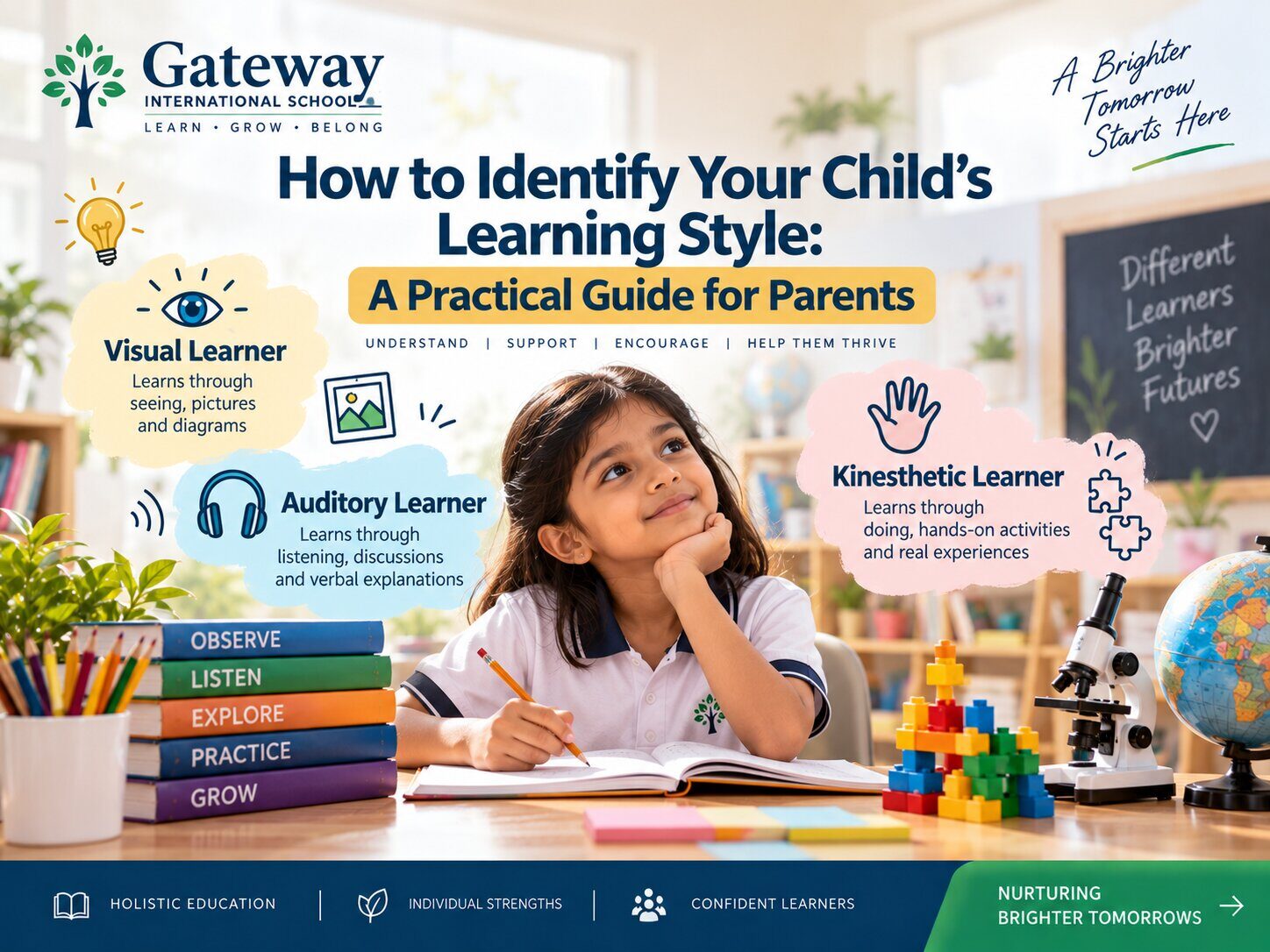
How to Identify Your Child’s Learning Style: A Practical Guide for Parents

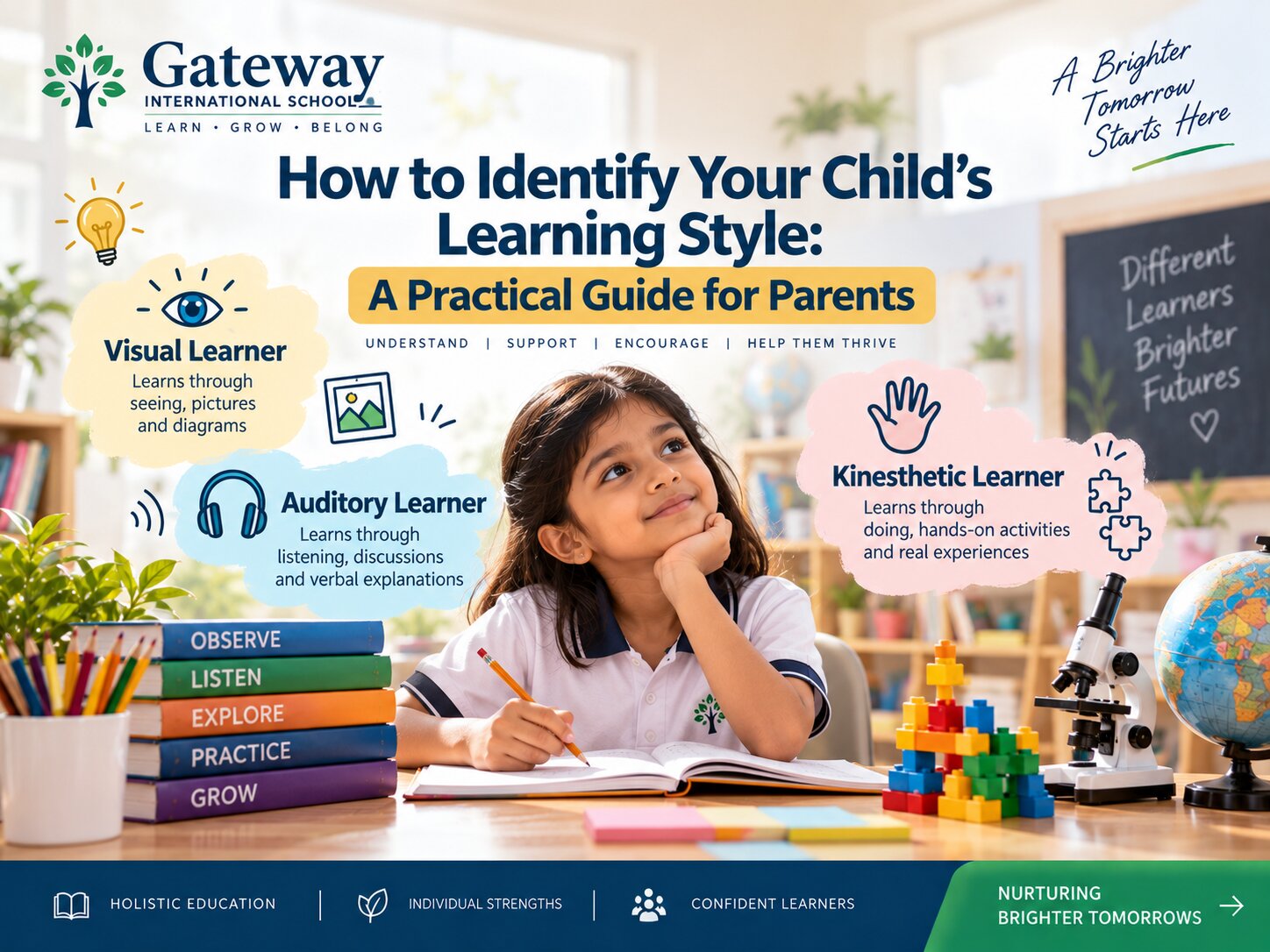
How to Identify Your Child’s Learning Style: A Practical Guide for Parents

Every child learns differently. Some children enjoy reading books and writing notes, while others understand concepts better through experiments, discussions, or hands-on activities. As a parent, understanding how your child engages with new information can help you create a more supportive learning environment at home and encourage a lifelong love of learning.

But how can you identify your child’s learning style? Is your child a visual learner, an auditory learner, or someone who learns best by doing?

In this guide, we explore common ways children engage with information, practical activities parents can try at home, and how schools can support different learning needs.

What Is a Learning Style?

A learning style generally refers to a person’s preferred way of engaging with information. Some children enjoy visual materials, others prefer listening to explanations, and some are drawn to practical activities and physical experiences.

Parents may notice that their child prefers:

  • Pictures, diagrams, charts, and visual demonstrations.
  • Conversations, storytelling, and verbal explanations.
  • Experiments, building activities, and hands-on exploration.
  • Reading, writing, and organising information in their own words.

These preferences can offer useful clues about how a child approaches learning.

However, it is important to remember that children do not necessarily have one fixed learning style. Research has not established that matching teaching methods to a supposed visual, auditory, or kinaesthetic learning type consistently improves academic performance. Children benefit from varied teaching methods, opportunities to practise, and approaches suited to the subject and task.

Four Common Ways Children Engage with Learning

1. Visual Learning: Understanding Through What They See

Some children are particularly drawn to visual information. They may enjoy colourful illustrations, maps, diagrams, photographs, videos, and mind maps.

Signs you may notice:

  • Your child enjoys picture books and illustrated explanations.
  • They like drawing diagrams to explain what they have learned.
  • They remember the layout of a page or the location of information in a book.
  • They enjoy puzzles, matching games, and visual patterns.

Activities to try at home:

  • Use diagrams to explain scientific concepts.
  • Create timelines when learning history.
  • Use mind maps to connect ideas.
  • Encourage your child to draw a picture representing a story or concept.

For example, when teaching the water cycle, a simple diagram showing evaporation, condensation, and precipitation can help make the process easier to understand.

2. Auditory Learning: Understanding Through Listening and Discussion

Some children engage particularly well with spoken explanations, conversations, and stories. Talking through a concept may help them organise their thoughts and identify what they understand.

Signs you may notice:

  • Your child enjoys being read to or listening to stories.
  • They frequently ask questions during explanations.
  • They enjoy discussing what happened at school.
  • They like explaining ideas aloud or listening to educational audio.

Activities to try at home:

  • Read stories together and discuss the characters.
  • Ask your child to explain a concept in their own words.
  • Use rhymes or rhythm to practise spelling and basic facts.
  • Encourage discussions about everyday experiences.

For example, after reading a story, ask your child to describe the main character, explain the problem, and predict what might happen next.

3. Kinaesthetic Learning: Understanding Through Doing

Some children are especially engaged when they can explore objects, conduct experiments, build models, or solve practical problems.

Signs you may notice:

  • Your child enjoys building blocks, puzzles, or craft projects.
  • They are curious about how things work.
  • They learn enthusiastically through experiments and demonstrations.
  • They enjoy activities that involve movement and interaction.

Activities to try at home:

  • Use building blocks to demonstrate mathematical concepts.
  • Grow a small plant to observe its development.
  • Conduct simple science experiments with adult supervision.
  • Use everyday objects to practise counting, sorting, and measuring.

For example, measuring ingredients while preparing a recipe can help children understand fractions, quantities, and measurement through a real-world activity.

4. Reading and Writing: Understanding Through Words

Some children prefer working with written information. Reading explanations, writing summaries, making lists, and keeping journals may help them process ideas.

Signs you may notice:

  • Your child enjoys reading books or informational articles.
  • They like keeping notebooks or writing stories.
  • They organise their thoughts through lists.
  • They prefer written instructions for certain tasks.

Activities to try at home:

  • Encourage a daily reading habit.
  • Ask your child to summarise a story in their own words.
  • Create vocabulary lists when learning a new language.
  • Invite them to keep a journal of interesting discoveries.

For example, after a nature walk, your child could write a short observation journal describing the plants, insects, and weather they noticed.

Remember that these categories are informal ways to describe preferences, not scientifically established learner types. Most children use a combination of approaches, and their preferences can change depending on the task, age, and subject.

How to Identify Your Child’s Learning Preferences

Rather than assigning your child a fixed label, observe how they approach different activities over time.

Step 1: Observe Their Natural Interests

Notice which activities your child chooses during free time. Do they enjoy reading, drawing, building, listening to stories, or conducting experiments?

These interests can help you discover opportunities to make learning engaging.

Step 2: Introduce the Same Concept in Different Ways

Choose a simple topic and present it using different methods.

For example, when teaching multiplication, you could:

  • Show a visual array of objects.
  • Explain the concept verbally.
  • Use physical objects such as buttons or blocks.
  • Write number sentences and practise problems.

Observe which methods help your child understand the concept and explain it independently.

Step 3: Ask Questions About Their Experience

Children can often tell you which activities they find helpful.

Try asking:

  • What helped you understand this topic?
  • Would you like to see an example or try it yourself?
  • Can you explain what you learned in your own words?
  • Which part was difficult, and what helped you work through it?

These conversations develop self-awareness and encourage children to take an active role in their education.

Step 4: Look for Understanding, Not Just Enjoyment

An activity may be enjoyable without necessarily leading to better understanding. Pay attention to whether your child can recall information later, apply a concept to a new situation, and explain their reasoning.

Short quizzes, practice exercises, discussions, and real-world applications can help you assess progress.

Step 5: Adapt and Experiment

Continue introducing different learning activities. Your child may prefer diagrams for science, discussions for language learning, and practical exercises for mathematics.

The goal is to discover useful strategies for each learning task, rather than determine one permanent learning style.

Why Every Child Needs a Balanced Learning Approach

Although children may have different preferences, effective learning often involves combining several methods.

For example, when learning about plants, a child might:

  1. Read a short explanation about plant growth.
  2. Examine labelled diagrams of a plant.
  3. Listen to a teacher explain photosynthesis.
  4. Grow a seed and observe its development.
  5. Write down observations and discuss the results.

This approach connects written information, visual representations, explanations, and practical experience.

Different subjects also call for different approaches. A geometry lesson may benefit from diagrams and models, while language development may require reading, listening, speaking, and writing.

A balanced learning environment gives children multiple ways to understand, practise, and apply what they learn.

How Schools Can Support Different Learning Needs

Schools play an important role in creating classrooms where children can engage with concepts in different ways.

Effective teaching may include:

Interactive classroom activities: Discussions, demonstrations, collaborative projects, and practical exercises help students engage actively with concepts.

Visual and digital resources: Charts, diagrams, videos, and simulations can make abstract ideas more accessible.

Inquiry-based learning: Encouraging students to ask questions, investigate evidence, and develop their own explanations supports curiosity and independent thinking.

Regular feedback: Teachers can identify misunderstandings, recognise progress, and provide appropriate support.

Opportunities for collaboration: Group discussions and projects allow students to share perspectives and learn from one another.

At Gateway Schools, a supportive learning environment can help children explore their interests, develop critical thinking, and build confidence as learners. Parents can learn more about the school’s educational programmes and approach to teaching through the official school website.

Common Mistakes Parents Should Avoid

While understanding your child’s preferences is helpful, avoid these common mistakes:

  • Labelling your child too early: Calling a child exclusively a visual or auditory learner may unnecessarily limit their learning experiences.
  • Assuming one method works for every subject: Different concepts often require different teaching strategies.
  • Comparing siblings: Children develop at different rates and may respond differently to the same activity.
  • Focusing only on strengths: Gentle encouragement to practise challenging skills can help children develop new abilities.
  • Ignoring persistent difficulties: If your child consistently struggles with reading, writing, attention, or understanding concepts, speak with their teacher and consider whether further assessment or support may be appropriate.

The objective is not to fit children into categories. It is to understand their needs and help them become confident, flexible learners.

Frequently Asked Questions

1. At what age can I identify my child’s learning preferences?

You can begin observing preferences in early childhood through play, stories, conversations, and practical activities. These preferences may evolve as your child grows, so it is best to keep an open mind.

2. Can a child have more than one learning style?

Yes. Children commonly enjoy and benefit from several approaches. Their preferences may also vary according to the subject, task, and learning environment.

3. Should I change my child’s entire study routine based on their learning style?

No. Instead, introduce varied learning methods and evaluate what helps your child understand, remember, and apply information. Combine these approaches with regular practice and feedback.

4. How can I help my child who struggles to concentrate?

Start with manageable study sessions, reduce distractions, include suitable breaks, and divide large tasks into smaller steps. If concentration difficulties persist or affect everyday functioning, discuss your concerns with the child’s teacher or an appropriate professional.

5. What is the most effective learning style for children?

There is no single learning style that is best for every child. Effective learning depends on the subject, prior knowledge, teaching methods, opportunities for practice, and individual needs. A varied and flexible approach is generally more useful than relying on a fixed learning-style category.

Conclusion

Identifying your child’s learning preferences begins with observation, curiosity, and open communication. Whether your child enjoys reading, listening, drawing, experimenting, or solving practical problems, the most important step is to provide opportunities to explore different ways of learning.

Rather than assigning a permanent learning-style label, focus on helping your child understand concepts, practise new skills, ask questions, and become increasingly independent.

Every child can grow into a confident learner when given the right encouragement, meaningful opportunities, and support that responds to their needs.

Explore Gateway Schools to learn more about its educational programmes and discover how a supportive school environment can help children develop the skills and confidence they need for lifelong learning.

WhatsApp Image 2026-09-22 at 5.38.50 PM

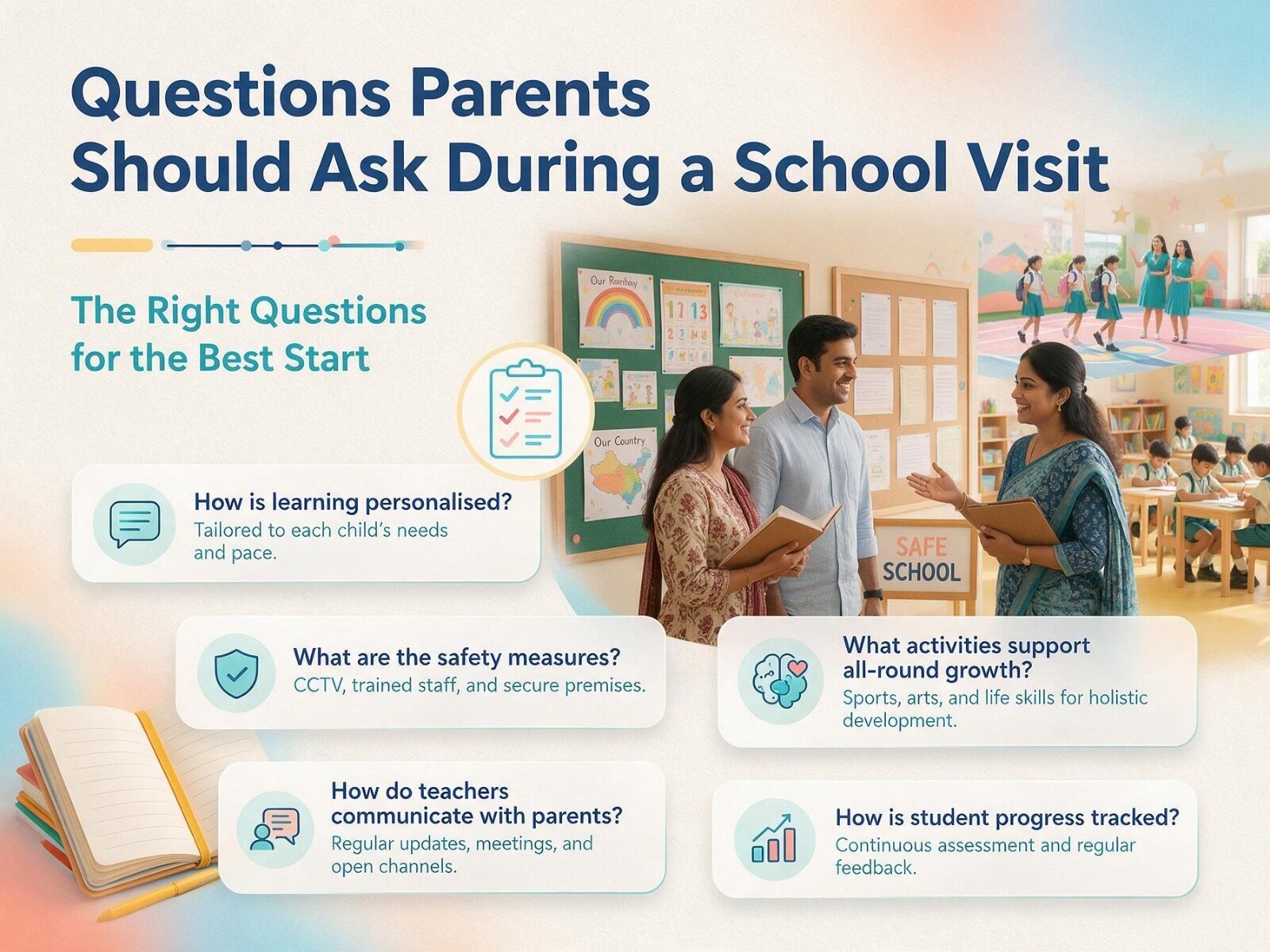
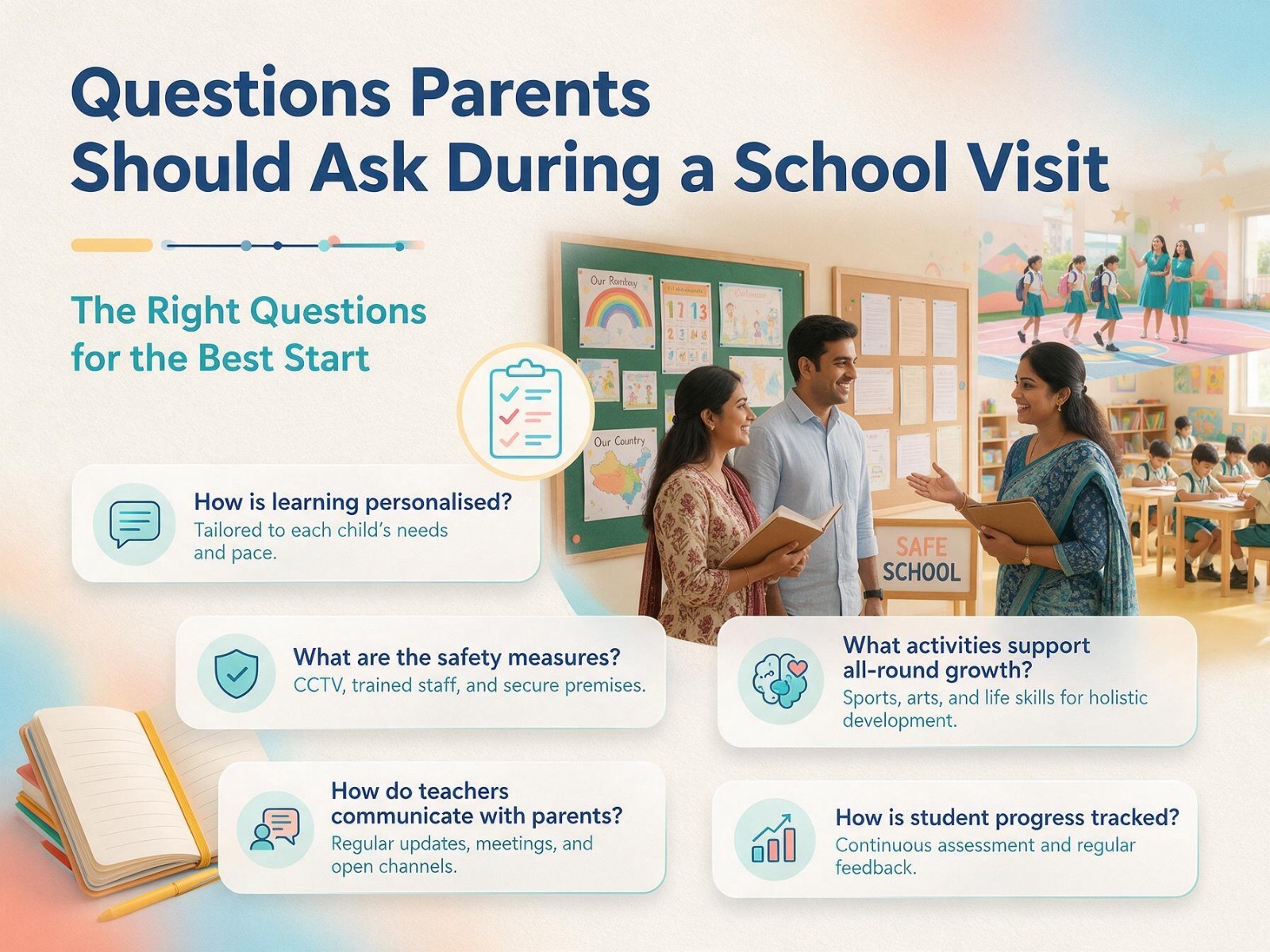
Questions Parents Should Ask During a School Visit

Questions Parents Should Ask During a School Visit

A school visit is your best chance to see beyond the website and brochure. It’s where you get a feel for the school’s culture, meet the people who will teach your child, and see how children actually learn every day.

But campus tours can move quickly, and it’s easy to walk away realising you forgot to ask something important. Going in with the right questions helps you gather what you really need to make a confident decision.

This guide covers the key questions to ask during a school visit, grouped by topic, along with what a good answer typically sounds like. Take it along on your next campus tour.

Before the Visit: A Little Preparation Goes a Long Way

  • Book a scheduled visit. A planned tour usually gives you time with the admissions team and, often, the principal or a coordinator.
  • Visit during school hours. Seeing classes in session tells you far more than an empty campus.
  • Bring your child if appropriate. Their reaction to the environment can be very revealing.
  • Write down your priorities. Know what matters most to your family, whether that’s curriculum, commute, sports, class size or something else.

Questions About Curriculum and Teaching

1. Which curriculum do you follow, and why did the school choose it?

A good school can explain clearly how its curriculum, whether CBSE, Cambridge IGCSE or IB, shapes teaching and learning, not just name the board.

2. How would you describe your teaching approach?

Listen for words like inquiry, projects, discussion and hands-on learning, balanced with strong fundamentals. Be cautious if the answer focuses only on textbooks and test scores.

3. How do you support children who learn at different speeds?

Look for specific examples, such as differentiated tasks, remedial sessions, enrichment activities or small-group support.

4. How is progress assessed and shared with parents?

The best answers mention a mix of assessments (projects, presentations, classwork and tests) and regular, detailed feedback.

5. How much homework do students get at this grade level?

A thoughtful school will have a clear, age-appropriate homework policy that balances learning with rest and play.

Questions About Teachers

6. What qualifications and training do your teachers have?

Ask whether teachers are trained specifically for the curriculum they teach, especially in Cambridge or IB schools.

7. How long do teachers typically stay at the school?

Low teacher turnover usually signals a positive work culture and consistency for students.

8. How does the school support teachers’ professional development?

Schools that invest in regular training tend to keep their teaching current and effective.

9. Can we meet the class teacher or coordinator?

A brief conversation will tell you a lot about their warmth, communication style and passion for teaching.

Questions About Class Size and Personal Attention

10. How many students are in each class?

Smaller classes generally allow more individual attention.

11. Are there teaching assistants in the younger grades?

Additional support in early years classrooms helps teachers give each child the care they need.

12. How well do teachers get to know each child?

A good answer will show that teachers understand students as individuals, their strengths, challenges and interests, not just their marks.

Questions About Safety and Security

13. What security measures are in place on campus?

Ask about entry and exit controls, visitor management, supervision during breaks and dispersal procedures.

14. What is your child protection policy?

The school should have a clear, written policy and trained staff who know how to respond to concerns.

15. How does the school handle bullying?

Look for a clear approach that focuses on prevention, quick action and support for all children involved.

16. What medical support is available?

Ask whether there’s a nurse or first-aid room on campus and how the school handles emergencies.

Questions About Student Wellbeing

17. Is there a counsellor on campus?

Access to counselling support is increasingly important for children’s emotional health.

18. How do you help new students settle in?

Good schools have thoughtful induction processes, buddy systems or orientation sessions for new students.

19. How do you manage exam stress in senior grades?

Listen for practical support, such as study-skills guidance, counselling and clear communication with parents.

Questions About Activities and Holistic Development

20. What sports, arts and co-curricular activities are offered?

Ask to see the activity calendar and facilities in use.

21. Are activities part of the school day or extra?

This affects both your child’s schedule and your overall costs.

22. What leadership opportunities do students have?

Student councils, house captains and prefect roles help children build confidence and responsibility.

23. How does the school encourage values and community service?

A school that nurtures character alongside academics prepares children for life, not just exams.

Questions About Results and Future Pathways

24. How have students performed in recent board examinations?

Results matter, but also ask how the school supports students of all abilities, not just top performers.

25. Where have your alumni gone for higher education?

Alumni outcomes, in India and abroad, give a clear picture of the opportunities the school opens up.

26. Can my child continue here through to Grade 12?

Continuity from early years to senior school avoids disruptive changes of school or board later.

27. How do you guide students with subject and career choices?

Look for structured guidance, such as coordinator meetings, career counselling and university application support.

Questions About Parent Communication

28. How often are parent-teacher meetings held?

Regular meetings show that the school values partnership with families.

29. How do teachers communicate with parents day to day?

Ask about diaries, apps, emails or portals, and how quickly teachers typically respond.

30. How can parents get involved in school life?

Schools that welcome parents to events, workshops and volunteering create stronger communities.

Questions About Fees and Admissions

31. What is the complete fee structure?

Ask for a clear breakdown, including admission, tuition, annual, activity, transport and examination fees.

32. What’s included and what’s charged separately?

Clarify costs for books, uniforms, trips, specialist coaching and board exams upfront.

33. Are instalment options available?

Many schools offer term-wise or split payment plans.

34. What does the admission process involve?

Ask about entrance assessments, interviews, required documents and key dates.

35. Do you offer mid-year admissions?

This is especially useful for families relocating to Chennai.

Questions About Transport and Daily Logistics

36. Do your bus routes cover our area?

Check pick-up points and approximate travel times.

37. What safety measures are in place on school buses?

Ask about attendants, tracking and driver verification.

38. What are the school timings, and is there after-school care?

This helps you plan around work schedules.

39. What are the arrangements for lunch and snacks?

Find out whether the school provides meals or children carry lunch.

Questions to Ask Yourself After the Visit

Once the tour is done, take a few minutes to reflect:

  • Did the children seem happy, curious and engaged?
  • Were teachers warm and approachable?
  • Were your questions answered openly and clearly?
  • Could you picture your child thriving here?
  • Does the school fit your family’s values and long-term plans?

Often, your instinct after a visit is as valuable as any answer you received.

Visit Gateway Group of International Schools

At the Gateway Group of International Schools, we welcome parents to visit, ask questions and experience our campuses for themselves. For two decades, Gateway has offered Chennai families a choice of curricula along the ECR and OMR corridors.

A choice of curricula. Gateway offers the IB programme at the IB World School in Padur, the Cambridge pathway from Primary to A Levels at Gateway The Complete School in Sholinganallur, and CBSE at campuses in Padur, Neelankarai and Mahabalipuram, along with Gateway Capstone School.

A clear admission process. Admissions are open from LKG to Grade 12. Early years applicants don’t take an entrance exam, while older students complete an age-appropriate assessment and interview, so the school can understand each child and place them well.

Holistic learning. Experiential teaching, sports, arts, cultural celebrations and student leadership opportunities are part of everyday school life.

Support for relocating families. Mid-year admissions are available for students with valid reasons for changing schools.

Wide transport coverage. School buses serve neighbourhoods across South Chennai, including Sholinganallur, Thoraipakkam, Perungudi, Velachery, Medavakkam, Perumbakkam, Navalur, Padur and Neelankarai.

Frequently Asked Questions

How long does a typical school visit take?

Most visits take between 45 minutes and an hour and a half, including a campus tour and a conversation with the admissions team.

Should I bring my child on the school visit?

For many families, yes. Seeing how your child responds to the environment can be very helpful, especially for older children.

How many schools should I visit before deciding?

Visiting two to four shortlisted schools usually gives you enough comparison without becoming overwhelming.

Is it okay to ask about fees during the visit?

Absolutely. A transparent school will be happy to share its complete fee structure.

What documents should I carry for admission?

Documents typically include recent report cards, a transfer certificate, birth certificate, photographs, address proof and Aadhaar card. Confirm the exact list with the school.

Book Your Campus Visit

The right questions help you see a school clearly and choose with confidence. We’d love to show you around and answer every question on your list.

Admissions for 2027–28 are open across Gateway campuses. Apply online, explore our admissions page, call 044-2449 3333, or email admission@gatewaytheschool.in to schedule your visit.

WhatsApp Image 2026-09-22 at 5.45.11 PM

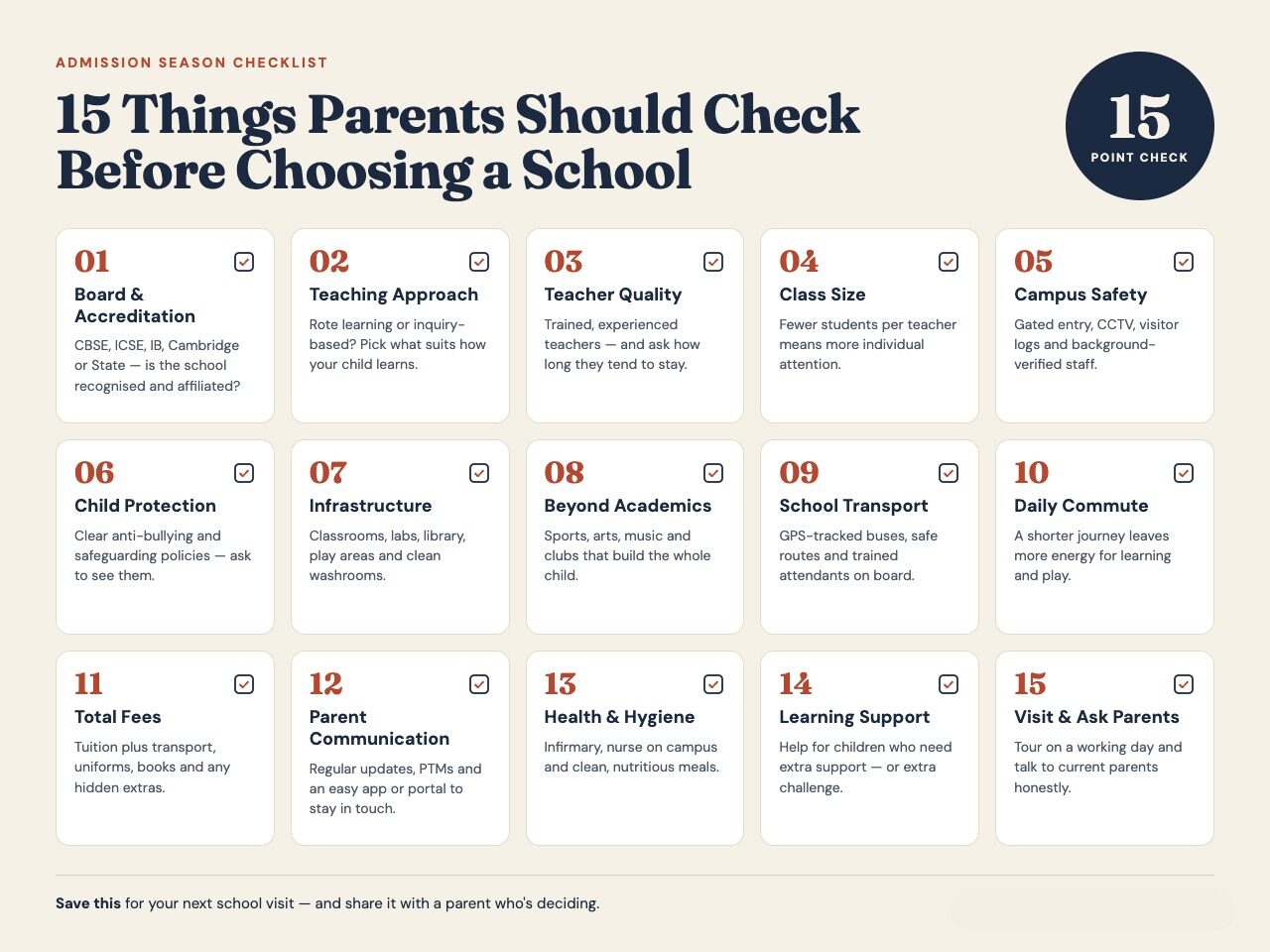
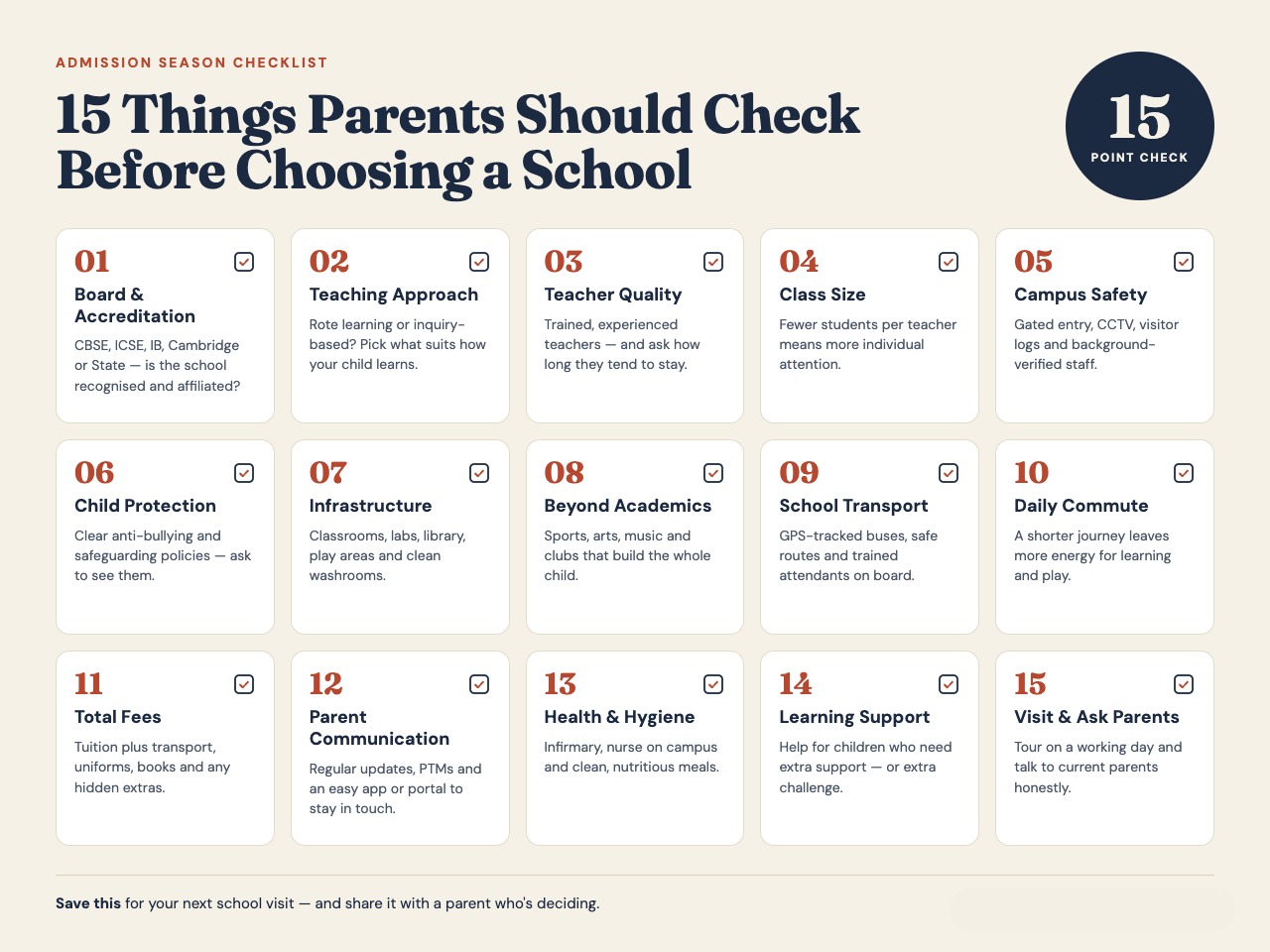
15 Things Parents Should Check Before Choosing a School

15 Things Parents Should Check Before Choosing a School

Choosing a school is one of the most important decisions you’ll make for your child. It shapes not only how they learn, but also who they become, the friendships they form, the confidence they build and the opportunities that open up for them later in life.

With so many options across Chennai, from CBSE and State Board to Cambridge IGCSE and IB schools, the choice can feel overwhelming. Glossy brochures and impressive websites only tell part of the story. To help you look beyond the surface, we’ve put together a practical checklist of 15 things every parent should check before choosing a school.

1. The Curriculum and Board

Start with the curriculum, because it shapes everything from teaching style to assessments and future pathways.

  • CBSE follows a nationally standardised syllabus and aligns closely with Indian competitive examinations.
  • Cambridge IGCSE offers subject flexibility and application-based learning, with qualifications recognised worldwide.
  • IB (International Baccalaureate) focuses on inquiry, interdisciplinary learning and global perspectives.

Think about your child’s learning style and your family’s long-term plans. Will your child pursue higher education in India, abroad, or keep both options open?

2. Affiliation and Recognition

Confirm that the school is properly affiliated or authorised by its board. CBSE schools publish a mandatory disclosure with affiliation details, while Cambridge and IB schools should be authorised by Cambridge International or the International Baccalaureate respectively. This is a basic check, but an essential one.

3. Teacher Qualifications and Experience

Teachers make the greatest difference to your child’s learning. Ask about teacher qualifications, subject expertise, curriculum-specific training and how the school supports ongoing professional development. Low teacher turnover is often a good sign of a healthy school culture.

4. Class Size and Student-Teacher Ratio

Smaller classes allow teachers to understand each child’s strengths and challenges and give more personal attention. Ask how many students are in each class and whether there are teaching assistants in the younger grades.

5. Teaching Approach

Does the school encourage children to ask questions, work on projects and learn by doing? Or is the focus mainly on textbooks and memorisation? The best schools balance strong academic fundamentals with hands-on, experiential learning that builds critical thinking and creativity.

6. Academic Results and Alumni Outcomes

Ask about board examination results, but don’t stop there. Find out where past students have gone for higher education and what careers they’ve pursued. A school’s alumni tell you a great deal about the kind of learners it produces.

7. Safety and Security

Your child’s safety is non-negotiable. Check campus security measures, visitor management, supervision during breaks, first-aid facilities and emergency procedures. Ask about child protection policies and how the school handles bullying.

8. Infrastructure and Facilities

Look at classrooms, science and computer labs, libraries, sports facilities, and spaces for art, music and performance. Facilities don’t need to be lavish, but they should be well maintained, safe and actually used in everyday learning.

9. Co-curricular Activities and Sports

Education goes well beyond the classroom. Look for a school with a full calendar of sports, arts, clubs, competitions, cultural events and celebrations. These experiences help children discover their passions and develop teamwork, discipline and confidence.

10. Holistic Development and Values

A good school nurtures character as well as academics. Ask how the school encourages leadership, responsibility, empathy and community service. Student leadership roles, house systems and service activities are strong indicators of a well-rounded approach.

11. Student Wellbeing and Support

Every child learns differently. Ask how the school supports students who need extra help and those who need extra challenge. Is there a counsellor on campus? How does the school support children’s emotional wellbeing, especially during transitions or exam years?

12. Parent Communication and Involvement

The best schools see parents as partners. Find out how often parent-teacher meetings are held, how progress is reported and how teachers communicate day to day. A school that welcomes parent involvement creates a stronger support system for your child.

13. Location and Transport

A long daily commute can tire children out before the school day even begins. Consider the distance from your home, traffic patterns on your route and whether the school’s bus routes cover your neighbourhood. Ask about transport safety measures such as attendants on buses and GPS tracking.

14. Fee Structure and Transparency

Ask for a complete breakdown of fees, including tuition, admission, annual, activity, transport and examination fees. Check what is included and what’s charged separately, whether instalment options are available and how fees are likely to change in higher grades. A transparent fee structure is a sign of a trustworthy school.

15. Continuity and Future Pathways

Think long term. Can your child continue in the same school from kindergarten through Grade 12? Changing schools or boards midway can disrupt learning, friendships and confidence. A school that offers a clear pathway to the senior grades gives your child stability throughout their school years.

Bonus Tip: Visit the Campus in Person

No checklist can replace a campus visit. Walk through the classrooms, observe how teachers interact with students, and notice whether the children seem happy, engaged and confident. Talk to the principal, teachers and, if possible, current parents. Trust what you see and feel. Often, the right school simply feels right.

Quick Checklist for Your School Visit

Take this list with you when you visit schools:

  • Curriculum and board suit my child’s learning style and future goals
  • School is properly affiliated or authorised
  • Teachers are qualified and experienced
  • Class sizes allow personal attention
  • Teaching encourages curiosity and hands-on learning
  • Strong results and alumni outcomes
  • Clear safety and child protection measures
  • Well-maintained facilities in active use
  • Wide range of sports and co-curricular activities
  • Focus on values, leadership and holistic growth
  • Counselling and learning support available
  • Regular, open communication with parents
  • Convenient location and bus routes
  • Transparent fee structure
  • Continuity from early years to Grade 12

Why Families Choose Gateway Group of International Schools

The Gateway Group of International Schools has been part of Chennai’s education landscape for two decades, offering families a choice of curricula across campuses along the ECR and OMR corridors.

A curriculum choice for every family. Gateway offers the IB programme at the IB World School in Padur, the Cambridge curriculum from Primary to A Levels at Gateway The Complete School in Sholinganallur, and CBSE at campuses in Padur, Neelankarai and Mahabalipuram, along with Gateway Capstone School.

Continuity from early years to Grade 12. Children can grow within one school community, from kindergarten through to university readiness.

Learning that builds real skills. Gateway follows an experiential, inquiry-driven approach that encourages hands-on learning, creativity, communication and problem-solving.

Holistic development. Sports, arts, cultural celebrations, competitions and student leadership opportunities are part of everyday school life.

Proven outcomes. Gateway alumni have gone on to institutions including VIT, IIIT Hyderabad, SRM Institute of Science and Technology, Symbiosis Law School and universities in the UK and Europe.

Wide transport coverage. School buses serve neighbourhoods across South Chennai, including Sholinganallur, Thoraipakkam, Perungudi, Velachery, Medavakkam, Perumbakkam, Navalur, Padur and Neelankarai.

Frequently Asked Questions

When should I start looking for a school for my child?

Ideally, begin your research several months before admissions open for the academic year. This gives you time to visit campuses, compare options and prepare documents.

How do I choose between CBSE, IGCSE and IB?

Consider your child’s learning style, your plans for higher education, and whether you may relocate. CBSE aligns closely with Indian competitive exams, while IGCSE and IB offer internationally recognised pathways.

What questions should I ask during a school visit?

Ask about teacher qualifications, class sizes, safety policies, co-curricular activities, parent communication, fees and alumni outcomes. Use the checklist above as a guide.

Is it better to choose a school close to home?

A shorter commute helps your child stay fresh and energetic, but it shouldn’t be the only factor. If a school further away is the right fit, check whether its bus routes cover your area.

How important is a campus visit?

Very important. A visit shows you the school’s culture, teaching style and environment in a way no website or brochure can.

Find the Right School for Your Child

The right school is one where your child feels safe, challenged, supported and inspired to grow. Use these 15 checks to look beyond first impressions and make a choice you can feel confident about.

Admissions for 2027–28 are open across Gateway campuses. Apply online, explore our admissions page, call 044-2449 3333, or email admission@gatewaytheschool.in to schedule a campus visit.